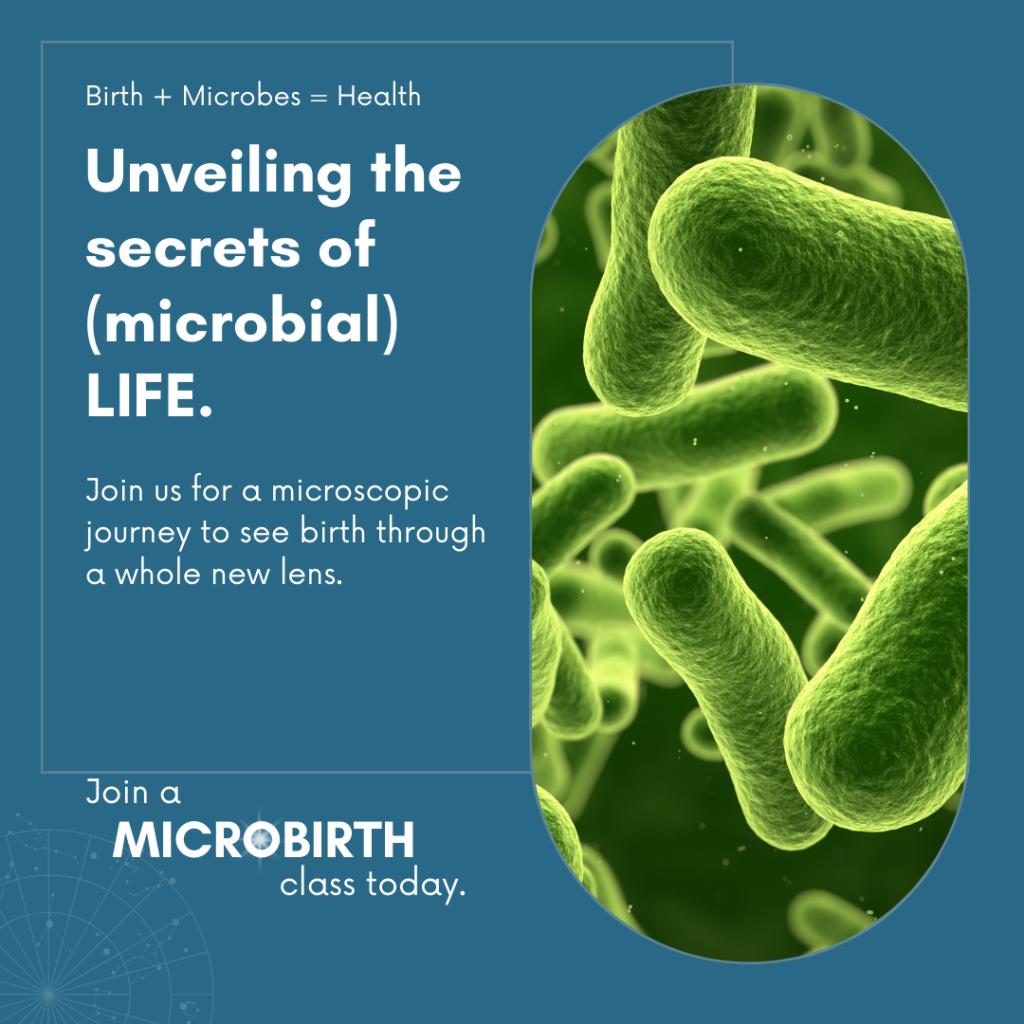
Inside and on our bodies live trillions of microbes. Together they form what scientists call the microbiome.
While that might sound strange at first, these microbes are essential for health. They help regulate digestion, support the immune system, and protect the body from harmful bacteria.
For babies, the microbiome is especially important. The microbes a baby receives during pregnancy, birth and early feeding help shape the development of their immune system and may influence health for years to come.
As a birth doula and Microbirth Approved Provider, I’m passionate about helping families understand how the earliest moments of life influence this incredible system.
If you’re interested in the science behind this work, you can explore the professional education and research behind Microbirth here:
Microbirth training and research
https://microbirth.teachable.com/

What Is the Infant Microbiome?
The infant microbiome refers to the community of microbes that begin colonising a baby’s body during early life.
These microorganisms live mainly in the gut, but also on the skin, in the mouth, and throughout the digestive system.
They help support:
- immune system development
- digestion and nutrient absorption
- protection against harmful bacteria
- regulation of inflammation
Because babies are still developing these systems, the microbes they receive early in life can have an important influence on how their bodies develop.h
YWhen Does a Baby’s Microbiome Begin Developing?
For many years scientists believed babies were completely sterile before birth. New research suggests the story may be more complex.
What we do know is that pregnancy, birth and early feeding all play a role in shaping the infant microbiome.
This means parents can support their baby’s microbial health long before the first nappy change,
Supporting Your Baby’s Microbiome During Pregnancy
A baby’s microbial journey begins with their mother.
During pregnancy, the health of the mother’s microbiome influences the environment the baby develops in.
Some simple ways to support this include:
• eating a diverse diet rich in plant foods
• supporting gut health with fibre
• spending time outdoors in natural environments
• reducing unnecessary antibiotics where possible
• supporting overall wellbeing and stress levels
Small everyday choices can help nurture a healthy microbial environment., understanding the microbiome helps families make informed choices and take supportive steps when needed.
Birth and the Seeding of the Microbiome
Birth is one of the most important moments for microbial transfer.
During vaginal birth, babies are exposed to beneficial bacteria from their mother’s body. These microbes begin colonising the baby’s skin and digestive system.
This process is often described as “seeding the microbiome.”
However, many factors can influence how this happens, including:
- mode of birth
- antibiotics during labour
- skin-to-skin contact
- early feeding
Understanding this helps parents make informed decisions and explore ways to support the microbiome regardless of how birth unfolds.
Skin-to-Skin Contact and Early Microbial Transfer
One of the simplest ways to support your baby’s microbiome is skin-to-skin contact after birth.
Skin-to-skin helps transfer beneficial microbes from parent to baby while also supporting:
- bonding
- temperature regulation
- breastfeeding
- emotional connection
These early microbial exchanges help populate your baby’s developing microbiome.
Breastfeeding and the Baby Microbiome
Breast milk plays a powerful role in shaping the infant microbiome.
It contains both beneficial bacteria and special sugars called human milk oligosaccharides. These act as food for good bacteria in the baby’s gut.
Breast milk helps:
- feed beneficial microbes
- strengthen the immune system
- support gut development
This is one of the reasons breastfeeding is so valuable for microbial health.
Why the Infant Microbiome Matters for Long-Term Health
Scientists are increasingly exploring how the microbiome influences long-term wellbeing.
Early microbial development may play a role in:
- immune resilience
- allergies and asthma
- digestion
- metabolic health
While many factors influence health throughout life, supporting the microbiome in early life may help build strong foundations.
Supporting Your Baby’s Microbiome in Everyday Life
The encouraging news is that many microbiome-supporting practices are simple and intuitive.
These include:
• skin-to-skin contact
• breastfeeding where possible
• time outdoors in nature
• close physical contact with caregivers
• supporting maternal health during pregnancy
These small, nurturing practices help support your baby’s natural development
Supporting Families to Make Informed Choices
Understanding the microbiome isn’t about creating pressure or perfection.
Instead, it gives families knowledge so they can make choices that feel right for them while supporting their baby’s health.
If you’re interested in learning more about how pregnancy, birth and early feeding influence your baby’s microbiome, this is something I love exploring with the families I support.
You can also learn more about my birth packages here.